An awareness of sensory perceptions in the moment
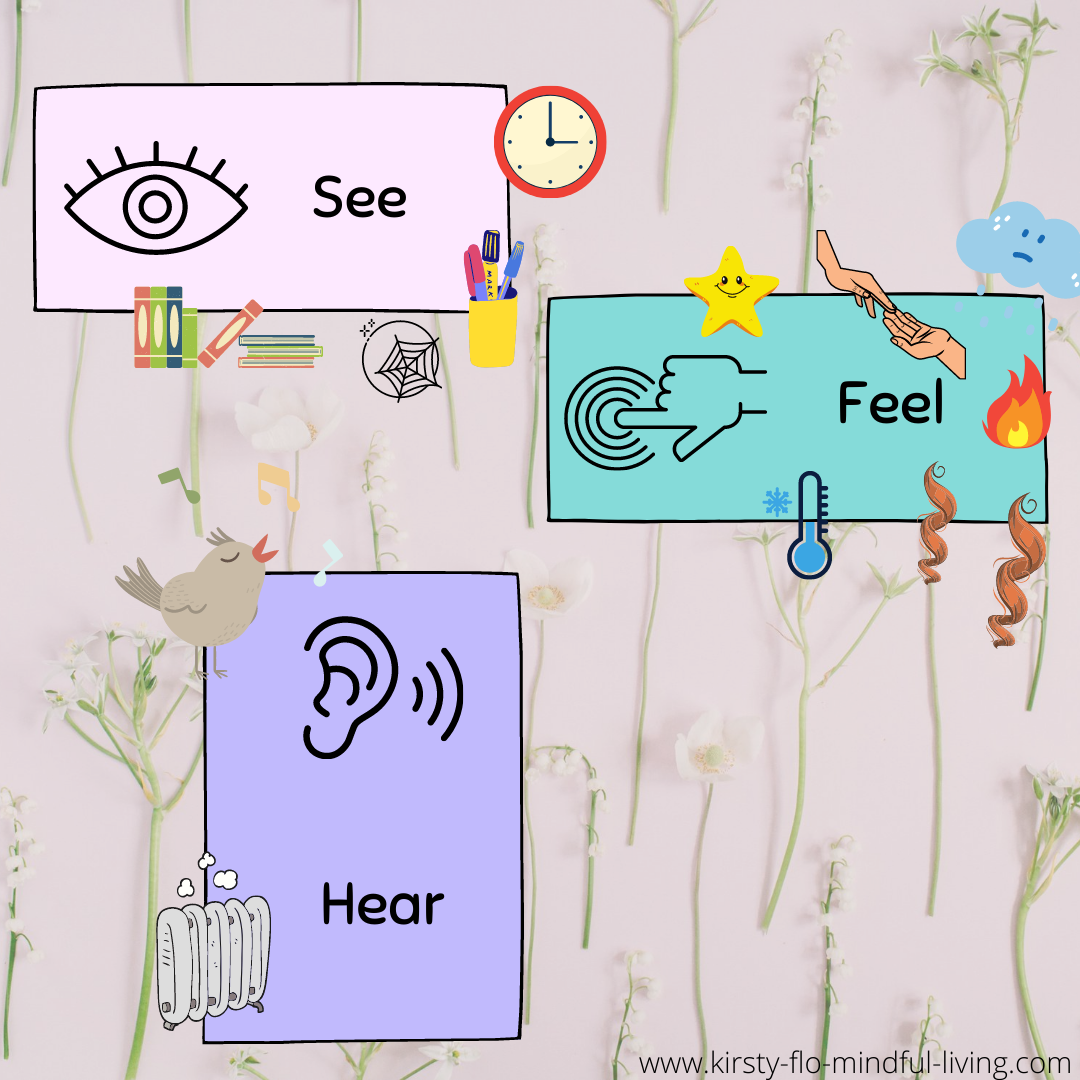
See, Feel, Hear is a well known mindfulness activity, for anyone – Children or adults. I have found it useful for children as a mindful moment or a longer group session to create an awareness of sound, touch and sight. Children I have worked with are often astonished at what they see, feel or hear in rooms that they are very familiar with but until now haven’t taken a moment to really appreciate their surroundings in a sensory way.
Time – Duration 2-10 minutes (See, hear, feel can be used as a mindful moment or a longer mindfulness activity)
Helps – sustain attention on one activity and to be aware of sensory perceptions around you.
Aims – Connects to where I am right now. To create an awareness of audio, visual and feelings or touch
Resources – Visual aids – images on A3/ posters of words: SEE HEAR FEEL
This exercise can be done at any time where a mindful moment is needed. It can be broken into three sections (see, hear and feel) and used at 3 points in a session/ classroom/ rehearsal or can be used as a longer Mindful activity.
- Sit comfortably on a chair or on the floor. Take a few mindful breaths with the children.
- Ask the children to slightly lower their gaze (so they are not staring at you!)
- Give the children a few moments to ‘see’ -they should take in visually what is in their immediate gaze. The first time they do this exercise the children may list objects, that’s ok
- The children should keep their sightings in their head until you ask if anyone wants to share what they have seen. The adults in the room may look beyond objects to the ‘dusty floor’ or the ‘shiny tiles’ or the ‘empty packet of soft figs!’. This may encourage the children to also look beyond objects next time
- After a short discussion, again, ask the children to lower their gaze and give them a few moments to ‘hear’ any sounds. They may hear birds outside, noises from the heating system, the person next to them breathing.
- Again, the children should keep the sounds in their head until invited to share.
- Repeat for ‘feel’. This can be interpreted as feeling physically -their hair tickling their face, their back against the chair or emotionally – they may be feeling sad, frustrated in their body . Again take a few moments to share.
- Finish the session with a few breaths.
Extension exercise
Resonating sound and take a few quiet breaths throughout the session.
 Kirsty-flo-Mindful -Living